Payments
A weekly or monthly run to a fixed list of payees, signed by the owners, with the gas paid for you.
What it does
A payment schedule is a named list of payees and amounts in one asset on one chain, paid weekly or monthly from a first payday you choose. A few days before each payday a run opens, the owners are told, one of them builds and proposes it, the rest sign, and the last signature executes it with the gas paid by Tamias.
What could go wrong without it
Payroll from a Safe by hand is a spreadsheet, a transaction builder, and one person copying forty addresses on the 28th. A wrong address is not noticed until the payee asks. A missed signature is not noticed until the next month.
What you see in the app
Setting it up. Only a Safe admin can create, edit, pause or delete a schedule. It takes a name, an asset, a chain, weekly or monthly, the first payday, and the payees: up to 200 of them, each with an address and an amount. Editing the payees changes future runs only. A run someone has already proposed keeps the list it was proposed with.
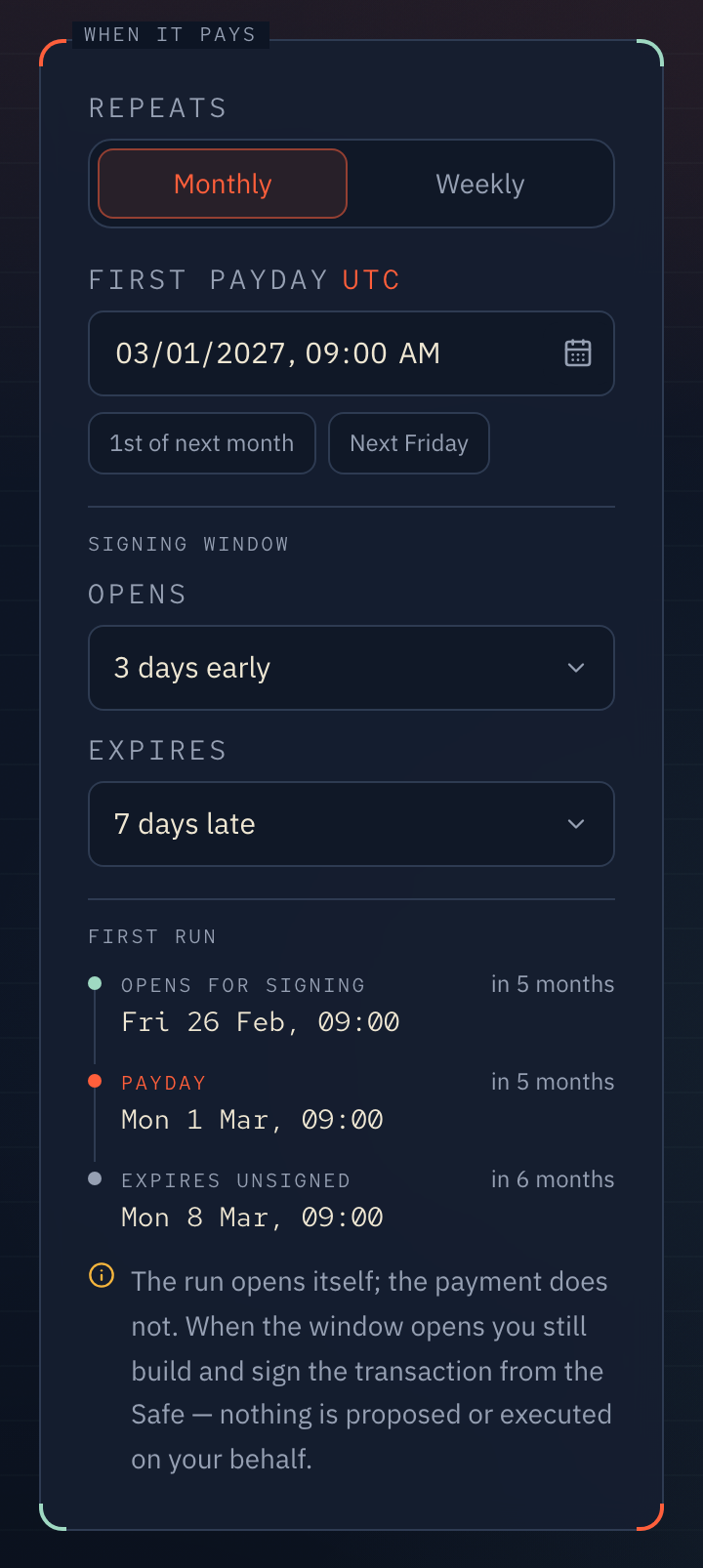
On the day. The run opens three days before payday by default, and everyone who can sign is told: "Payment run open for signing". A signer opens it, checks the payees and presses "Build and propose". The page shows "2 of 3 signed" until the threshold is met. Every unsigned owner gets one reminder every twelve hours.
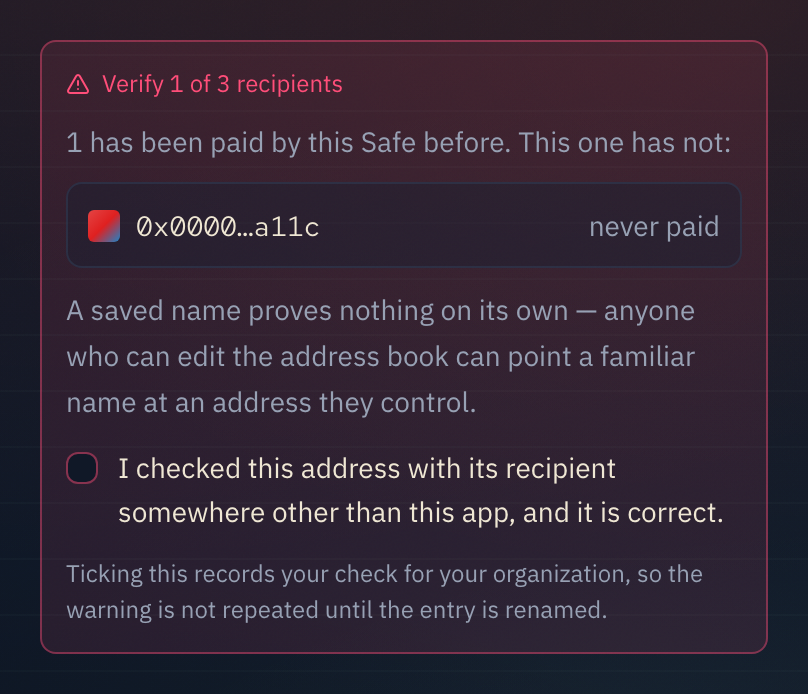
Each payee is checked before the run is built: whether this Safe has paid them before, whether their name was changed and never used since, and whether a teammate has confirmed the address with them outside the app. See Naming an address.
Gas. The last signature executes the run and Tamias's relayer pays. If the relayer cannot, because the transaction would revert or the organization's monthly gas budget is spent, the ordinary Execute button remains and whoever presses it pays.
Afterwards. The run is recorded as paid or failed, with the transaction and the reason. Opening, proposing and resolving a run all go to the activity log.
What it does not do
The app never proposes or signs on its own. If nobody signs within the grace period, seven days by default, the run expires and is never paid late. An admin resolves it.
A run is one transaction on one chain. Paused schedules open no new runs, but a run already open stays open. The phone app counts a waiting run on its home screen. It holds no keys and cannot sign.